Introduction
Sales Tax Biometric Verification Pakistan has become one of the most important compliance requirements for businesses registered with the Federal Board of Revenue (FBR). Under the latest regulatory framework, many Sales Tax Registered Persons are required to complete annual biometric verification to maintain accurate registration records and strengthen tax compliance.
Whether you are an importer, exporter, manufacturer, wholesaler, retailer, or service provider, understanding this requirement is essential. Failure to comply may result in delays, notices, or other regulatory actions.
This guide explains the legal background of SRO 350(1)/2024, why biometric verification has been introduced, who must complete it, how to verify through NADRA e-Sahulat and IRIS 2.0, the documents required, common mistakes to avoid, and practical compliance tips based on professional tax consultancy experience.
What is Sales Tax Biometric Verification Pakistan?
Sales Tax Biometric Verification Pakistan is a verification process introduced by the Federal Board of Revenue (FBR) to confirm the identity of individuals responsible for registered sales tax businesses. Instead of relying only on documents submitted during registration, FBR now requires biometric authentication to verify that the registered person or authorized representative is genuine.
The verification is carried out using biometric data matched through NADRA. Once the identity is confirmed, the verification status is updated in the FBR system.
This process supports several important objectives:
- Prevent fake or duplicate registrations.
- Improve transparency in the tax system.
- Reduce tax fraud and identity misuse.
- Maintain accurate taxpayer records.
- Strengthen Sales Tax Compliance Pakistan.
For genuine taxpayers, the process is straightforward and usually takes only a short time when all required information is available.
Why Has FBR Introduced Biometric Verification?
The introduction of FBR Biometric Verification is part of a broader effort to improve Pakistan’s tax administration.
Over the years, authorities identified several issues, including:
- Fake business registrations.
- Identity theft.
- Misuse of sales tax registrations.
- Fraudulent input tax claims.
- Non-active registered businesses.
Biometric verification provides an additional layer of authentication by confirming that the registered individual is physically present and their identity matches official NADRA records.
For compliant businesses, this creates a more transparent business environment where legitimate taxpayers are better protected from fraudulent practices.
It also helps FBR maintain an updated taxpayer database, making regulatory monitoring more effective and reducing the risk of unauthorized changes to registration information.
Understanding SRO 350(1)/2024
One of the most important developments in this area is SRO 350(1)/2024.
This notification introduced revised compliance requirements relating to biometric verification for Sales Tax Registered Persons.
The primary objectives include:
- Improving taxpayer verification.
- Enhancing registration accuracy.
- Supporting digital transformation.
- Reducing misuse of tax registrations.
- Encouraging stronger compliance standards.
Businesses should carefully review the provisions applicable to their circumstances because compliance requirements may differ depending on business type and registration status.
What Does SRO 350 Compliance Mean?
SRO 350 Compliance refers to meeting all verification obligations introduced under the notification, including completing biometric verification where applicable and ensuring that registration information remains accurate and up to date.
Businesses should not assume that completing registration once is sufficient. Regular compliance reviews help avoid unnecessary complications in future dealings with FBR.
Who Must Complete Annual Biometric Verification?
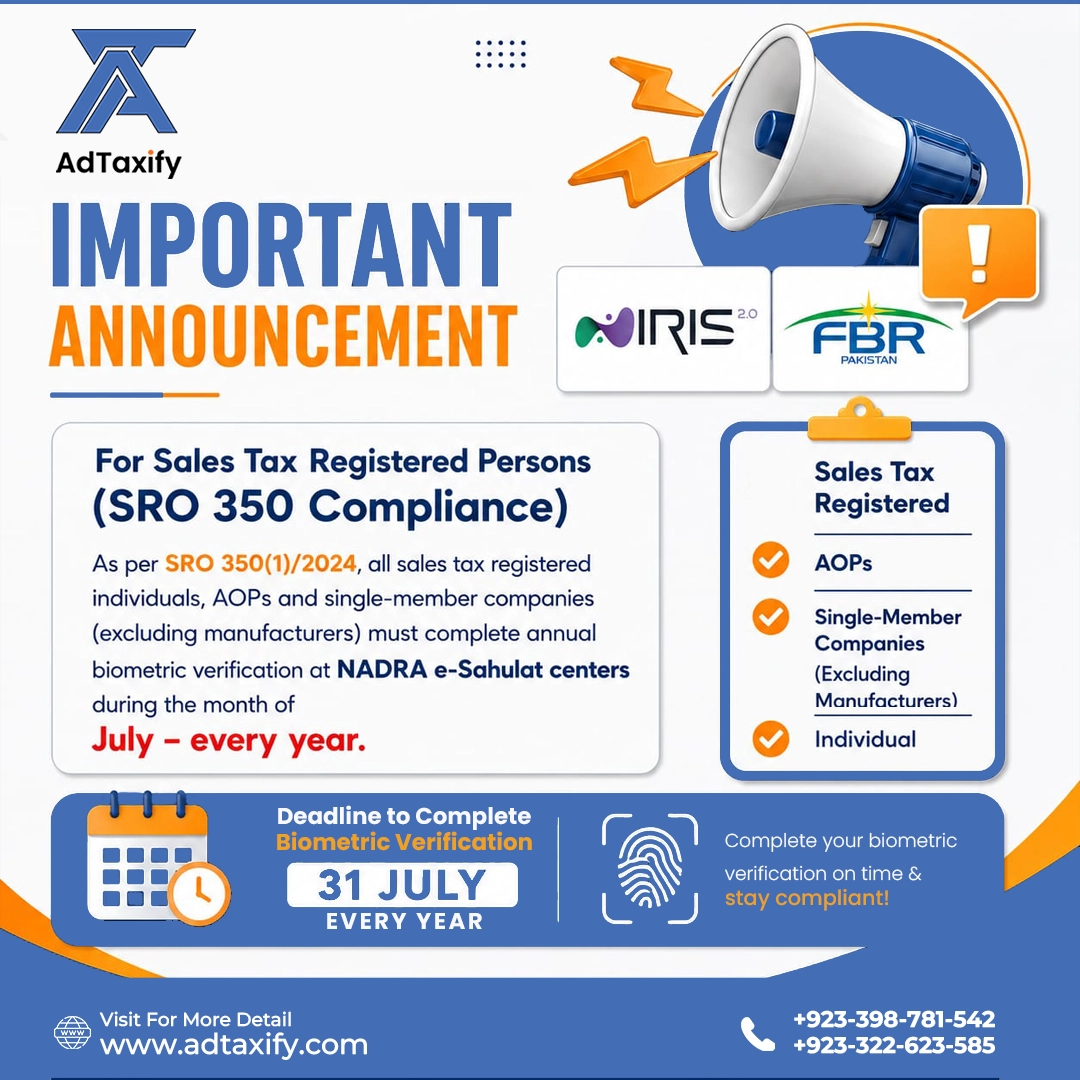
Annual Biometric Verification generally applies to Sales Tax Registered Persons who fall within the categories specified by FBR regulations.
This may include:
- Sole proprietors.
- Company directors.
- Partners of registered firms.
- Authorized representatives.
- Certain business owners updating registration details.
Importers, exporters, manufacturers, wholesalers, retailers, and companies should regularly monitor FBR notifications to determine whether biometric verification is required during a particular compliance period.
If a business undergoes changes such as ownership updates, address changes, or modifications to registration information, additional verification requirements may also arise.
Rather than waiting until the deadline, businesses should complete verification as early as possible to avoid unnecessary delays.
Step-by-Step Biometric Verification Process
Although individual circumstances may vary, the general process is straightforward.
Step 1: Review Your Registration Status
Log in to your FBR account and confirm whether biometric verification is required for your registration.
Step 2: Prepare Required Documents
Ensure that your CNIC, business registration details, NTN information, and relevant tax records are available before beginning the process.
Step 3: Visit an Authorized Verification Facility
If physical biometric verification is required, visit an authorized NADRA e-Sahulat center.
Step 4: Complete Fingerprint Verification
Your biometric data will be captured and matched with NADRA records.
Step 5: Verification Confirmation
Once successful, the verification status is updated within the FBR system.
Step 6: Keep Verification Records
Maintain copies of acknowledgements or confirmation receipts for future reference and compliance audits.
How to Complete Verification Through NADRA e-Sahulat
NADRA e-Sahulat Biometric Verification is one of the primary methods used for completing biometric authentication.
The process generally involves:
Visit an Authorized e-Sahulat Center
Carry your original CNIC and any supporting business documentation.
Identity Verification
The operator verifies your identification details before collecting biometric information.
Fingerprint Authentication
Your fingerprints are matched against NADRA’s database to confirm your identity.
Confirmation
After successful verification, confirmation is transmitted to the relevant government system for further processing.
To avoid delays:
- Carry original documents.
- Ensure your fingerprints are clear.
- Verify your registration information beforehand.
- Visit during working hours to avoid heavy queues.
How to Complete IRIS 2.0 Biometric Verification
IRIS 2.0 Biometric Verification forms part of FBR’s digital compliance framework and allows taxpayers to manage various registration-related activities through the IRIS portal.
While the exact workflow may vary depending on FBR updates, the general process includes:
Log in to IRIS 2.0
Access your registered taxpayer account using your credentials.
Check Notifications
Review any pending compliance notices related to biometric verification.
Follow Verification Instructions
Where applicable, IRIS will guide you through the required verification steps or direct you to complete biometric authentication through the approved process.
Monitor Verification Status
After completing biometric verification, regularly check your account to confirm that your status has been successfully updated.
Keep Compliance Records
Download or save confirmation documents for your business records. Maintaining proper documentation can simplify future compliance reviews and inspections.
Completing verification promptly helps businesses avoid unnecessary interruptions in their dealings with FBR and supports ongoing sales tax compliance.
Required Documents
Before starting the biometric verification process, make sure you have all the necessary documents available. Having complete and accurate information helps avoid delays or rejection during verification.
The commonly required documents include:
- Original Computerized National Identity Card (CNIC) of the proprietor, partner, director, or authorized representative.
- National Tax Number (NTN).
- Sales Tax Registration Number (STRN), if applicable.
- Business registration documents, such as the incorporation certificate, partnership deed, or sole proprietorship evidence.
- Active mobile number and email address registered with FBR.
- Authorization letter or board resolution (where an authorized representative is completing the process).
- Any additional documents requested by FBR based on your business type.
Professional Tip: Before visiting a NADRA e-Sahulat center or updating your information through IRIS 2.0, verify that your CNIC details, mobile number, and email address match your FBR registration records. Even minor discrepancies can delay the verification process.
Common Mistakes Businesses Make
After assisting numerous businesses with tax compliance, one common observation is that many compliance issues arise from avoidable mistakes rather than complex legal problems.
Waiting Until the Last Date
Many businesses delay Annual Biometric Verification until the deadline. This often results in long queues at NADRA e-Sahulat centers, system congestion, and unnecessary stress.
Using Outdated Registration Information
Businesses frequently change addresses, directors, partners, or contact numbers without updating their FBR registration. These inconsistencies can interrupt the verification process.
Ignoring FBR Notifications
Some taxpayers overlook emails or notices issued through the IRIS portal. Regularly monitoring your IRIS account helps you stay informed about compliance requirements.
Incorrect Authorized Representative
In companies and partnerships, biometric verification must often be completed by the appropriate authorized person. Sending someone who is not officially authorized can lead to rejection.
Missing Supporting Documents
Incomplete documentation remains one of the most common reasons for delays. Always carry original identification and any documents requested by the relevant authority.
Assuming One-Time Verification Is Enough
Some business owners believe biometric verification only needs to be completed once. Depending on FBR regulations and future notifications, Annual Biometric Verification or additional verification may be required.
Penalties for Non-Compliance
Failing to comply with Sales Tax Biometric Verification Pakistan requirements can create significant administrative and operational challenges for businesses.
While enforcement depends on the applicable provisions of tax law and FBR notifications, non-compliance may result in:
| Issue | Possible Impact |
|---|---|
| Failure to complete verification | Compliance notices from FBR |
| Delayed verification | Administrative delays in registration matters |
| Incorrect registration information | Additional verification requests |
| Continued non-compliance | Restrictions under applicable FBR regulations |
| Unresolved compliance issues | Possible suspension or regulatory action where applicable |
Businesses should always refer to the latest FBR notifications because compliance requirements and deadlines may change over time.
Rather than waiting for enforcement action, proactive compliance is always the safer and more cost-effective approach.
Benefits of Timely Biometric Verification
Completing biometric verification on time provides several practical advantages beyond meeting legal requirements.
Smooth Business Operations
Verified businesses are less likely to experience delays in registration-related processes.
Better Regulatory Standing
Timely compliance demonstrates that your business maintains accurate records and follows regulatory requirements.
Reduced Risk of Notices
Keeping verification status updated reduces the chances of receiving avoidable compliance notices.
Improved Trust
Banks, suppliers, customers, and government agencies often view compliant businesses as more reliable and trustworthy.
Easier Future Updates
Businesses with updated verification records generally experience fewer complications when making future amendments to their FBR registration.
Stronger Tax Compliance
Regular verification supports overall Sales Tax Compliance Pakistan by ensuring taxpayer information remains accurate and current.
Sales Tax Compliance Pakistan Best Practices
Biometric verification should not be treated as a one-time activity. Instead, it should be part of your overall compliance strategy.
Consider adopting the following best practices:
Maintain Updated Business Information
Immediately update changes relating to:
- Business address
- Directors
- Partners
- Contact numbers
- Email addresses
- Authorized representatives
Review IRIS Regularly
Check your IRIS account periodically for:
- Notices
- Alerts
- Compliance requirements
- Registration updates
Maintain Proper Records
Store copies of:
- Verification confirmations
- Registration certificates
- Business licenses
- Tax returns
- Supporting correspondence
Good recordkeeping simplifies audits and future compliance.
Monitor Regulatory Changes
FBR frequently issues new SROs and circulars. Staying informed allows businesses to adapt quickly to changing requirements.
Seek Professional Advice
Whenever regulations appear unclear, consulting an experienced Tax Consultant can prevent costly mistakes and save valuable time.
How AdTaxify Tax Consultancy Helps Businesses
Managing tax compliance requires more than simply submitting returns. Modern businesses must stay updated with changing regulations, digital systems, and verification requirements.
AdTaxify Tax Consultancy supports businesses across Pakistan by providing practical compliance solutions tailored to their specific needs.
Our services include:
Biometric Verification Assistance
We guide businesses through the complete verification process, helping ensure that documentation and registration details are accurate before submission.
Registration Review
Our experts review business registration records to identify inconsistencies that may delay verification.
IRIS 2.0 Assistance
We assist clients in understanding IRIS notifications, updating registration information, and completing compliance requirements efficiently.
Sales Tax Advisory
Whether you are a newly registered business or an established company, our team provides guidance on Sales Tax Compliance Pakistan and helps reduce compliance risks.
Complete Tax Support
In addition to biometric verification, businesses can also benefit from our:
- Sales Tax Registration
- NTN Registration
- Income Tax Services
- Corporate Tax Services
- Business Registration
- FBR Compliance Services
- Tax Consultancy Services
Our objective is to help businesses remain compliant while allowing owners to focus on growth instead of administrative challenges.
Conclusion
Sales Tax Biometric Verification Pakistan is now an important part of maintaining a compliant sales tax registration. It strengthens the integrity of Pakistan’s tax system by confirming taxpayer identities, reducing fraudulent registrations, and improving the accuracy of FBR records.
For business owners, the process should not be viewed as just another regulatory requirement. Timely biometric verification protects your registration, reduces the likelihood of compliance issues, and supports smooth interaction with FBR systems.
The best approach is to prepare your documents in advance, monitor IRIS notifications regularly, complete verification before deadlines, and seek professional guidance whenever necessary. Staying proactive today can prevent unnecessary delays and administrative complications in the future.
Call To Action
Need professional assistance with Sales Tax Biometric Verification Pakistan or other tax compliance matters?
The experienced team at AdTaxify Tax Consultancy can help you navigate FBR requirements with confidence. Whether you need assistance with biometric verification, Sales Tax Registration, NTN Registration, Income Tax Services, Corporate Tax Services, or complete FBR Compliance Services, we are here to support your business every step of the way.
Contact AdTaxify today and let our tax professionals help you maintain full compliance while you focus on growing your business.
Frequently Asked Questions (FAQs)
1. What is Sales Tax Biometric Verification Pakistan?
Sales Tax Biometric Verification Pakistan is a verification process introduced by the Federal Board of Revenue (FBR) to authenticate the identity of Sales Tax Registered Persons through biometric verification. It helps maintain accurate taxpayer records and strengthens compliance with Pakistan’s sales tax regulations.
2. Who is required to complete biometric verification?
The requirement generally applies to Sales Tax Registered Persons, including sole proprietors, company directors, partners, and authorized representatives, depending on the latest FBR notifications and applicable regulations.
3. What is SRO 350(1)/2024?
SRO 350(1)/2024 is an official FBR notification that introduced updated biometric verification requirements for certain registered taxpayers. Businesses should review the notification carefully to understand their compliance obligations.
4. What is the purpose of Annual Biometric Verification?
Annual Biometric Verification helps FBR ensure that taxpayer information remains accurate and up to date. It also reduces fraudulent registrations and improves transparency in Pakistan’s tax system.
5. Where can I complete biometric verification?
Biometric verification can generally be completed through authorized NADRA e-Sahulat centers. Depending on the applicable process, taxpayers may also need to monitor updates through the IRIS 2.0 portal.
6. What documents are required for biometric verification?
Most taxpayers should keep the following documents ready:
- Original CNIC
- NTN
- Sales Tax Registration details
- Business registration documents
- Active registered mobile number
- Registered email address
- Authorization documents (if applicable)
Additional documents may be requested depending on the business structure.
7. What happens if I do not complete biometric verification?
Failure to comply may result in compliance notices, delays in registration-related activities, or other actions under applicable FBR regulations. Businesses should always complete verification within the prescribed timelines.
8. Can a company authorize someone else for biometric verification?
Depending on the applicable rules, an authorized representative may complete certain compliance activities if proper authorization has been provided. Businesses should ensure that authorization documents comply with FBR requirements.
9. How long does the biometric verification process take?
The actual biometric authentication usually takes only a few minutes. However, the total processing time may vary depending on document readiness, system availability, and workload at the verification center.
10. How can AdTaxify Tax Consultancy help?
AdTaxify Tax Consultancy assists businesses with biometric verification, Sales Tax Registration, NTN Registration, IRIS 2.0 guidance, FBR Compliance Services, Income Tax Services, Corporate Tax Services, and overall tax compliance support.